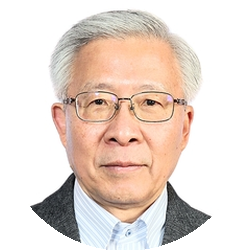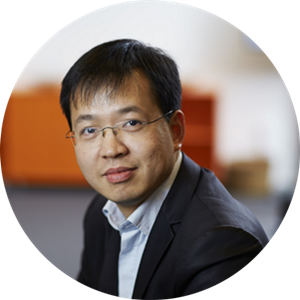
Prof. Yonghui Li, The University of Sydney, Australia
ARC Future Fellow, IEEE Fellow

Yonghui Li is now a Professor and Director of Wireless Engineering Laboratory in School of Electrical and Information Engineering, University of Sydney. He is the recipient of the Australian Research Council (ARC)Queen Elizabeth II Fellowship, ARC Future Fellowship and ARC Industry Laureate Fellowship in 2008, 2012 and 2025, respectively. He is an IEEE Fellow and Clarivate highly cited researcher. His current research interests are in the area of wireless communications. Professor Li was an editor for IEEE transactions on communications, IEEE transactions on vehicular technology and guest editors for several special issues of IEEE journals, such as IEEE JSAC, IEEE IoT Journals, IEEE Communications Magazine. He received the best paper awards from several conferences. He has published one book, more than 300 papers in premier IEEE journals and more than 200 papers in premier IEEE conferences. His publications have been cited more than 25000 times.


Prof. Rajkumar BuyyaDirector, Cloud Computing and Distributed Systems (CLOUDS) Lab,
The University of Melbourne, Australia
CEO, Manjrasoft Pvt Ltd, Melbourne, Australia

Dr. Rajkumar Buyya is a Redmond Barry Distinguished Professor and Director of the Quantum Cloud Computing and Distributed Systems (qCLOUDS) Laboratory at the University of Melbourne, Australia. He is also serving as the founding CEO of Manjrasoft, a spin-off company of the University, commercializing its innovations in Cloud Computing. He has authored over 850 publications and seven textbooks including "Mastering Cloud Computing" published by McGraw Hill, China Machine Press, and Morgan Kaufmann for Indian, Chinese and international markets respectively. Dr. Buyya is one of the highly cited authors in computer science and software engineering worldwide (h-index=176, g-index=384, i10-index=841, and 165,600+ citations). A bibliometric study by Stanford University and Elsevier since 2019 (for six consecutive years), Dr. Buyya is recognized as the Highest-Cited author in the Distributed Computing field worldwide. He graduated 60 PhD students who are working in world-leading research universities and high-tech companies such as Microsoft, Google, and IBM. He has been recognised as IEEE Fellow, a "Web of Science Highly Cited Researcher" for seven times since 2016, the "Best of the World" twice for research fields (in Computing Systems in 2019/2024 and Software Systems in 2021/2022/2023) as well as "Lifetime Achiever" and "Superstar of Research" in "Engineering and Computer Science" discipline twice (2019 and 2021) by the Australian Research Review.

Software technologies for Grid, Cloud, Fog, Quantum computing developed under Dr.Buyya's leadership have gained rapid acceptance and are in use at several academic institutions and commercial enterprises in 50+ countries around the world. Manjrasoft's Aneka Cloud technology developed under his leadership has received "Frost New Product Innovation Award". He served as founding Editor-in-Chief of the IEEE Transactions on Cloud Computing. He is currently serving as Editor-in-Chief of Software: Practice and Experience, a long-standing journal in the field established in 1970. He has presented over 750 invited talks (keynotes, tutorials, and seminars) on his vision on IT Futures, Advanced Computing technologies, and Spiritual Science at international conferences and institutions in Asia, Australia, Europe, North America, and South America. He has recently been recognized as a Fellow of the Academy of Europe. For further information on Dr.Buyya, please visit his cyberhome: www.buyya.com

Speech Title: Neoteric Frontiers in Cloud and Quantum Computing

Abstract: The twenty-first-century digital infrastructure and applications are driven by Cloud computing, Internet of Things (IoT), Artificial Intelligence (AI), and Quantum computing paradigms. The Cloud computing paradigm has been transforming computing into the 5th utility wherein "computing utilities" are commoditized and delivered to consumers like traditional utilities such as water, electricity, gas, and telephony. It offers infrastructure, platform, and software as services, which are made available to consumers as subscription-oriented services on a pay-as-you-go basis over the Internet. Its use is growing exponentially with the continued development of new classes of applications such as AI-powered models (e.g., ChatGPT) and the mining of crypto currencies such as Bitcoins. To make Clouds pervasive, Cloud application platforms need to offer (1) APIs and tools for rapid creation of scalable and elastic applications and (2) a runtime system for deployment of applications on geographically distributed Data Centre infrastructures (with Quantum computing nodes) in a seamless manner.
This keynote presentation will cover (a) 21st century vision of computing and identifies various emerging IT paradigms that make it easy to realize the vision of computing utilities; (b) innovative architecture
for creating elastic Clouds integrating edge resources and managed Clouds, (c) Aneka 6G, a 6th generation Cloud Application Platform, for rapid development of Big Data/AI applications and their deployment on private/public Clouds driven by user requirements,  (d) experimental results on deploying Big Data/IoT applications in engineering, health care (e.g., COVID-19), deep learning/Artificial intelligence (AI), satellite image processing, and natural language processing (mining COVID-19 literature for new insights) on elastic Clouds, (e) QFaaS: A Serverless Function-as-a-Service Framework for Quantum Computing; and iQuantum Simulation Toolkit, and (f) new directions for emerging research in Cloud and Quantum computing.


Prof. Alfredo Cuzzocrea
Founder and Director, Big Data Engineering and Analytics Laboratory (iDEA Lab)
University of Calabria, Rende, Italy

Alfredo Cuzzocrea is Distinguished Professor of Computer Engineering, and Founder and Director of the Big Data Engineering and Analytics Laboratory (iDEA Lab) of the University of Calabria, Rende, Italy. He also covers the role of Full Professor in Computer Engineering at the Department of Computer Science of the University of Paris City, Paris, France, as holding the Excellence Chair in Big Data Management and Analytics. He is Honorary Professor of Computer Engineering at the School of Engineering and Technology of the Amity University, Noida, India. He is also Research Associate of the National Research Council (CNR), Rome, Italy. Previously, he has covered the role of Full Professor in Computer Engineering at the Department of Computer Science, University of Lorraine, Nancy, France, where he held the Excellence Chair in Big Data Privacy and Cybersecurity. He is author or co-author of more than 900 papers in international conferences (including CIKM, EDBT, MDM, SSDBM, PAKDD, DOLAP), international journals (including TKDE, JCSS, IS, INS, JMLR, FGCS) and international books. He is recognized in prestigious international research rankings.

Speech Title: Multidimensional Supervised Learning over Big Data: Models, Definitions, and Solutions
Abstract:
Supervised learning is an important task in Artificial Intelligence (AI) in various areas such as Computer Vision and Image Understanding, Data Mining (DM) and Knowledge Discovery, and so forth. In the era of big data, it faces critical challenges coming from the curse of dimensionality, heterogeneous data sources, and the need for scalable computation. To address these, Multidimensional Supervised Learning (MSL) has emerged as a formal paradigm that unifies multidimensional modeling with predictive analytics. This talk introduces theoretical foundations of MSL, along with rigorous definitions of multidimensional data, where facts, dimensions, hierarchies, and measures are explicitly represented to preserve structural and semantic richness.
Our approach for performing MSL over big data builds upon OLAP-based multidimensional modeling to organize large-scale datasets into interpretable and computationally efficient structures. On top of this modeling layer, we perform pattern discovery and pattern matching across data hierarchies to capture meaningful relationships and enhance predictive accuracy as well as intuitive visual exploration.
By formalizing definitions, developing models, and presenting scalable solutions, this speech positions multidimensional supervised learning as a basis for next-generation big data analytics.